
Invasive and Nuisance Species Management
The South Florida Water Management District (District) manages nearly 1.5 million acres of public lands. The District’s ability to restore and protect South Florida’s natural systems is continually challenged by the presence and spread of invasive plants and animals. These non-native species can aggressively invade native habitats, displace native species, alter ecosystem structure and function, and interfere with water management and restoration goals.
The District is responsible for managing nuisance and invasive vegetation throughout its 16-county region. Invasive plant management occurs in canals and on levees, as well as in public lakes and rivers, Water Conservation Areas, Stormwater Treatment Areas (STAs), interim lands, Everglades restoration project lands, and other public conservation lands.
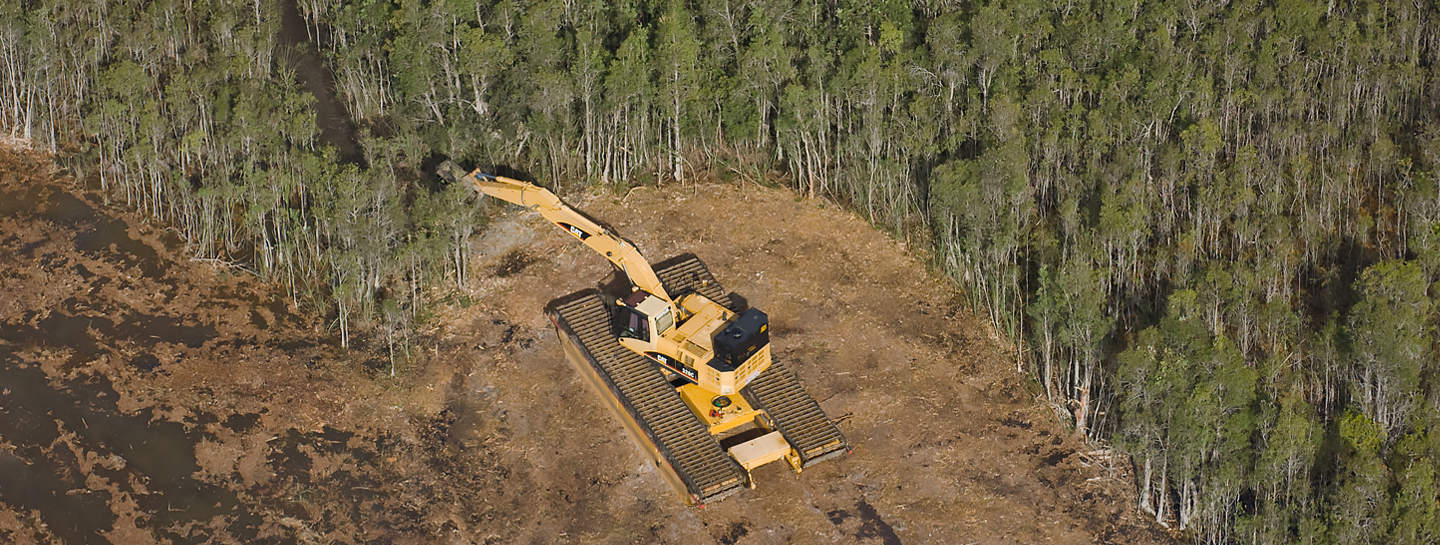
Control strategies include prescribed burns, mechanical removal, targeted herbicide application, and the use of approved biological control agents. Integrated pest management principles guide these efforts to ensure treatments are effective, environmentally responsible and cost-efficient.
The District works year-round to prevent, detect, control, and manage priority invasive species. South Florida supports one of the highest concentrations of established non-native species in the continental United States, with roughly 200 introduced plant and animal species present. This creates an ongoing and complex management challenge requiring sustained funding, scientific monitoring and strong interagency coordination.
Managing Invasive Plants to Protect our Environment
Invasive Plants
In addition to protecting natural habitats, the District actively manages invasive and nuisance vegetation within its flood control and water supply infrastructure. Aquatic plants in canals, levees, and water control structures are controlled to maintain conveyance capacity, ensure proper operation of pumps and gates, and reduce flood risk during high-water events. Vegetation management in these systems is essential to sustaining regional water supply deliveries and protecting communities from flooding.
In Stormwater Treatment Areas, invasive and nuisance species such as primrose willow, water lettuce, water hyacinth, and crested floating heart are actively managed where they interfere with water quality improvement performance and treatment efficiency. Vegetation management in these systems is closely coordinated with water quality objectives to maintain optimal nutrient removal capacity.
Control Efforts
Invasive plant management must be continuous to keep pace with rapid plant growth, seed production, and reinfestation. The District operates one of the largest aquatic plant management programs in the nation, managing floating and submerged vegetation throughout the region. Annual treatment acreage fluctuates depending on weather, hydrology, and plant response, but management remains extensive across priority lands and waterways.
The District’s melaleuca management program is a key component of a coordinated statewide effort to control this invasive species, which is widely recognized as a national model for long-term, integrated management.
Biological control continues to be an important component of the District’s strategy. The District collaborates with the U.S. Department of Agriculture–Agricultural Research Service, the U.S. Army Corps of Engineers, and others to develop, evaluate, and implement biological control programs. Established melaleuca-feeding insects have reduced seed production and plant vigor, while the Lygodium-feeding insects provide measurable suppression of Old World climbing fern. Additional biological control agents for priority species are evaluated under strict quarantine to ensure host specificity and protection of native plants before release.
Invasive Animals
Non-native animals are widely distributed across South Florida, with the highest concentrations occurring in the Greater Everglades ecosystem. Interagency research and monitoring help identify the species posing the greatest ecological risk. Prioritizing invasive animal control remains complex due to overlapping agency authorities and the wide diversity of established species.
The District works closely with the Florida Fish and Wildlife Conservation Commission (FWC), federal partners, cooperative invasive species management areas and research institutions to address high-priority invasive animals, including Burmese pythons, Argentine black and white tegus, and Nile monitors throughout the Greater Everglades and Lake Okeechobee regions.
Burmese pythons remain one of the most significant invasive wildlife threats. Removal efforts continue through contracted programs and public engagement initiatives coordinated by FWC and the District. Ongoing monitoring, research, and adaptive management are critical to limiting further expansion and ecological impacts.
The District continues to coordinate regionally to prevent new introductions, improve early detection and rapid response capacity, and reduce long-term ecological impacts across South Florida’s restoration landscape. For more information on invasive species in South Florida and the collective efforts to control them, see the “Status of Invasive Species” in the South Florida Environmental Report.
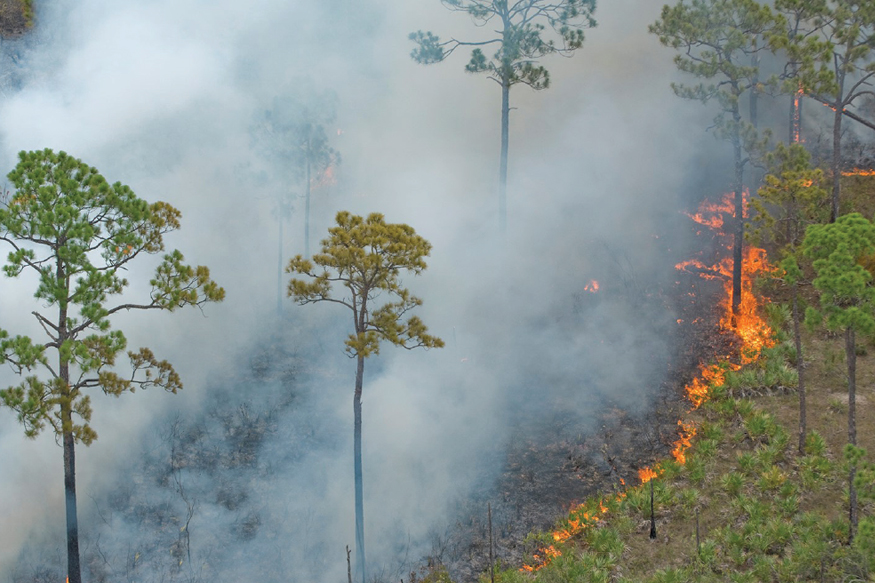 Controlled burn
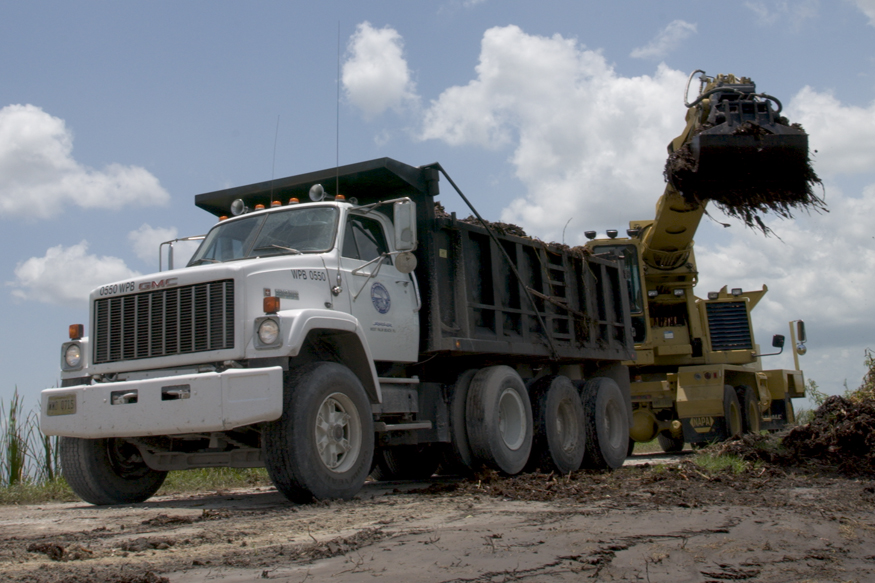 Removal of mechanically harvested vegetation
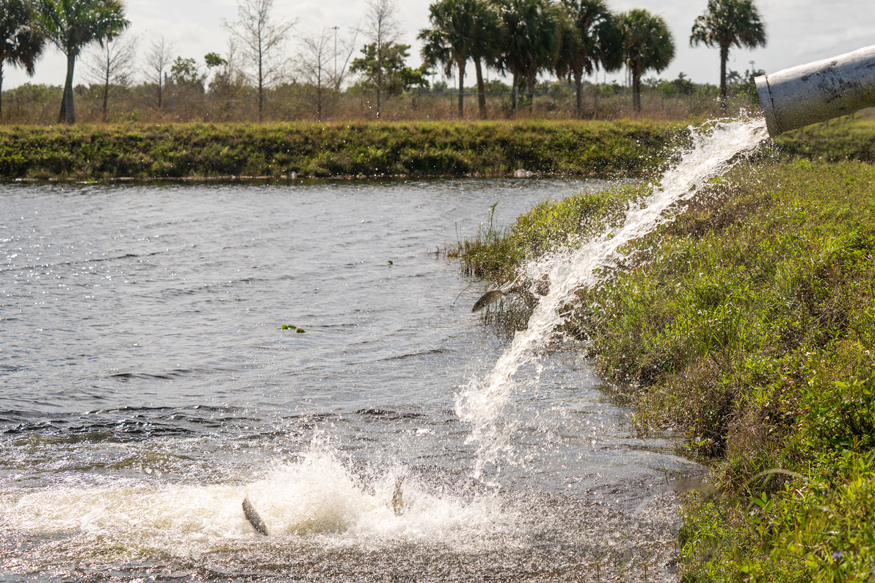 Sterile grass carp being released into District canal